Table of Contents
- The 2-Minute Easy Read: The Reality of KPV Research
- Core Terminology: Navigating KPV Pharmacology
- Molecular Origins: From α-MSH to KPV
- The Mechanism of Action: PepT1 and NF-κB Inhibition
- KPV and gut health: The PepT1 'catch'
- Dermatological applications: Beyond pigmentation
- Immune modulation and antimicrobial synergy
- Current research landscape: Animal models vs. human data
- Safety, side effects, and legal status
- Dosage and administration in research protocols
- Key takeaways: The HackedAlive summary
- Future directions and related resources
The 2-Minute Easy Read: The Reality of KPV Research
KPV is a three-amino acid fragment of a larger hormone — and that structural simplicity is precisely what makes it scientifically interesting, and genuinely difficult to evaluate.
The KPV — short for Lysine-Proline-Valine — is a tripeptide derived from the C-terminal end of alpha-melanocyte-stimulating hormone (α-MSH), a hormone most researchers associate with skin pigmentation and immune signaling. Critically, KPV isolates the anti-inflammatory properties of its parent hormone without carrying along the melanocortin receptor activation that triggers tanning. That separation is not a minor technical detail — it is the central mechanistic argument for why this compound attracts research interest in the first place.
Here is the high-level picture before the deeper analysis:
- A fragment, not a hormone. KPV retains anti-inflammatory signaling capacity from α-MSH while shedding the pigmentation effects. Understanding α-MSH itself is useful context; HackedAlive's analysis of another α-MSH-derived compound illustrates how structurally related peptides can produce very different physiological outcomes.
- Primary research targets: gut and skin. The compound has been studied most extensively in inflammatory bowel disease (IBD) models and skin inflammation contexts, where its ability to reach inflamed tissue orally or topically has driven significant research design decisions.
- The inflammation mechanism is specific. KPV appears to act on the NF-κB pathway — a central regulator of inflammatory signaling — rather than producing broad immunosuppression. The mechanism is targeted, which is both the compound's appeal and a reason for careful interpretation.
- The catch is significant. The overwhelming majority of published data comes from animal models and in vitro studies. Human evidence remains sparse. Enthusiasm in longevity and peptide research communities frequently runs ahead of what the evidence hierarchy actually supports.
Who this is for: Researchers, clinicians, and evidence-aware longevity enthusiasts who want a mechanism-focused, uncertainty-aware analysis of KPV — not a promotional summary. If you have followed compounds like BPC-157 through the same research-first lens, KPV presents a comparable challenge: genuine mechanistic plausibility paired with a human evidence gap that demands honest acknowledgment.
The next step is understanding the core pharmacological language — because the terminology surrounding KPV shapes how the research is framed and how its limitations are often obscured.
Core Terminology: Navigating KPV Pharmacology
Understanding KPV benefits requires a precise vocabulary — the pharmacology only becomes legible once the key molecular actors are named and defined.
Before analyzing the evidence, it is worth establishing the four structural and mechanistic concepts that appear repeatedly throughout the research literature. Each term below represents a distinct layer of the KPV story, from its hormonal origins to the inflammatory pathway it targets.
- Tripeptide
- A molecule consisting of three amino acids joined by peptide bonds. KPV — Lysine-Proline-Valine — is the smallest meaningful fragment of its parent hormone, and its compact size is precisely what allows oral delivery to remain biologically plausible. Larger peptides are typically degraded before reaching target tissue.
- Alpha-MSH (α-Melanocyte-Stimulating Hormone)
- The parent hormone from which KPV is derived. Alpha-MSH regulates both pigmentation and immune response, operating through melanocortin receptors distributed across skin, gut, and brain tissue. KPV represents the C-terminal tripeptide sequence of α-MSH — and notably, it lacks the His-Phe-Arg-Trp sequence required to bind MC1R, which means it does not trigger tanning. That structural difference is not incidental — it is what makes KPV a more pharmacologically focused fragment rather than a systemic hormonal signal.
- PepT1 Transporter
- A proton-coupled oligopeptide transporter expressed primarily in intestinal epithelial cells. PepT1 acts as the primary cellular gatekeeper for KPV uptake in gut tissue, moving the tripeptide across the epithelial barrier and into underlying immune-active cells. Research into targeted KPV delivery has specifically exploited PepT1 expression patterns in inflamed colonic tissue to improve localized bioavailability.
- NF-κB (Nuclear Factor Kappa B)
- A transcription factor complex that functions as a master regulator of inflammatory gene expression. When activated, NF-κB drives the production of cytokines including TNF-α, IL-6, and IL-1β. KPV’s proposed anti-inflammatory mechanism centers on its ability to suppress NF-κB activation — a pathway shared by numerous experimental compounds, which is worth keeping in mind when evaluating specificity of effect.
These four concepts form the structural backbone of every mechanistic claim made about KPV. Readers who find themselves evaluating dose-response relationship data or comparing KPV against other peptides — including those explored in compound-stacking discussions elsewhere — will return to these definitions repeatedly.
With the vocabulary established, the next step is tracing where KPV actually came from — specifically, how researchers isolated this fragment from α-MSH and what they were trying to preserve when they did.
Molecular Origins: From α-MSH to KPV
KPV is not an independent discovery — it is the deliberate reduction of a larger hormonal signal to its functional minimum. Understanding that lineage clarifies both what the peptide can reasonably be expected to do and where its evidence base begins.
Alpha-melanocyte-stimulating hormone (α-MSH) attracted serious research attention in the 1980s and 1990s, initially for its role in pigmentation. As that work matured, investigators observed that α-MSH exerted consistent anti-inflammatory effects across multiple tissue types — effects that appeared separable from its pigmentation activity. The question that followed was precise: which portion of the 13-amino acid sequence carried the anti-inflammatory signal?
Systematic fragmentation studies identified the C-terminal tripeptide — Lysine-Proline-Valine, or KPV — as the region responsible for the majority of that activity. Critically, research has confirmed that KPV retains the potent anti-inflammatory properties of α-MSH without inducing skin pigmentation. That separation matters for any compound intended for long-term or high-frequency use, since pigmentation changes would represent an unwanted and dose-complicating side effect. Stripping the sequence down to three amino acids removed that liability while preserving the mechanistically relevant portion.
The Lysine-Proline-Valine sequence also offers structural advantages that the full α-MSH molecule does not. Proline introduces a conformational rigidity that resists enzymatic degradation — a property that distinguishes KPV from many linear tripeptides that are rapidly cleaved in biological environments. This structural stability supports oral bioavailability studies, including nanoparticle-based delivery research, and informs ongoing discussion about optimal kpv peptide dosage across administration routes.
This is why some researchers describe KPV as a "stealth" version of its parent hormone. It retains the core anti-inflammatory signal while shedding the hormonal surface area that triggers pigmentation pathways and potentially complicates receptor selectivity. The analogy to other synthetic peptide analogs — compounds engineered to isolate one function from a multifunctional parent molecule — is instructive. Structural minimalism is the design principle, not a limitation.
What remains less resolved is how that minimalism translates at the cellular level. The next section examines the specific uptake mechanism — PepT1 transport and NF-κB inhibition — that researchers believe explains KPV's downstream effects on inflammation.
The Mechanism of Action: PepT1 and NF-κB Inhibition
KPV suppresses inflammation through two sequential events: cellular entry via a transporter protein, then direct interference with the signaling cascade that drives cytokine production.
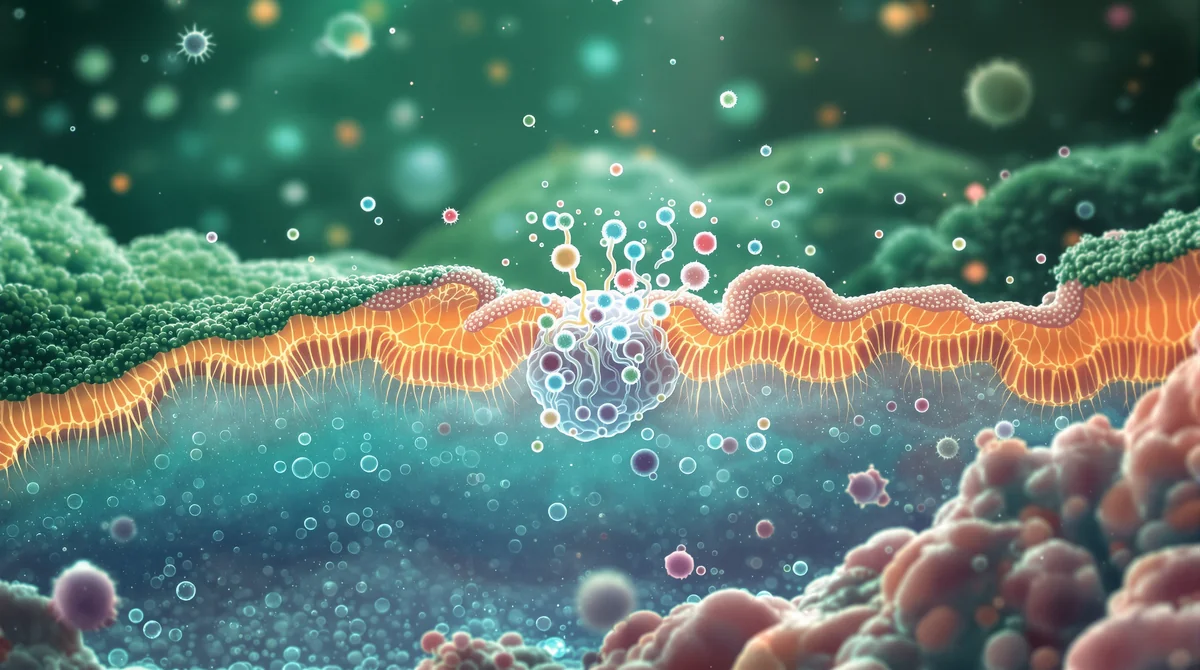
PepT1-mediated uptake is the gateway. PepT1 — the intestinal oligopeptide transporter — recognizes KPV's tripeptide structure and actively shuttles it across the epithelial membrane. This is not passive diffusion. The transporter binds the peptide, uses an electrochemical proton gradient to drive it intracellularly, and releases it into the cytoplasm intact. That structural integrity matters: KPV must arrive whole to engage its downstream targets. The PepT1-mediated uptake study (Dalmasso et al., 2008) confirmed this entry route in intestinal epithelial cells and macrophages, providing the mechanistic foundation for the gut-specific effects discussed in subsequent research.
Once inside the cell, KPV acts on NF-κB, the master transcription factor governing inflammatory gene expression. Under normal conditions, NF-κB is held inactive in the cytoplasm by inhibitory proteins. Inflammatory stimuli trigger its release and translocation to the nucleus, where it switches on genes encoding pro-inflammatory cytokines. KPV significantly decreases that nuclear translocation — the same study (Gastroenterology, Dalmasso et al., 2008) demonstrated this effect directly. Less nuclear NF-κB means fewer inflammatory genes activated at the transcriptional level.
Cytokine modulation follows as a downstream consequence. By blocking NF-κB translocation, KPV reduces the production of IL-8 and TNF-alpha — two central mediators of acute and chronic inflammatory responses. IL-8 recruits neutrophils to the site of tissue damage; TNF-alpha amplifies the entire inflammatory cascade. Reducing both simultaneously limits the self-reinforcing loop that characterizes conditions such as inflammatory bowel disease. This is a meaningful mechanistic target, though it is worth noting that observing reduced cytokines in cell cultures does not automatically translate to equivalent reductions in human tissue.
The MAP kinase pathway adds another layer. This signaling network — comprising ERK, JNK, and p38 kinases — works in parallel with NF-κB to regulate cytokine transcription and cell survival responses. KPV appears to inhibit components of this pathway, creating a secondary brake on inflammatory signaling. Researchers evaluating potential KPV side effects have generally noted that this dual-pathway suppression, while mechanistically useful, also raises questions about immune modulation at higher doses or during active infection — a caveat worth holding onto.
The combined effect of PepT1 entry, NF-κB suppression, and MAP kinase inhibition positions KPV as a mechanism-specific anti-inflammatory agent. Whether that specificity holds under the more chaotic conditions of human disease is precisely what the gut health evidence attempts — imperfectly — to answer.
KPV and gut health: The PepT1 'catch'
KPV's effectiveness in the gut depends almost entirely on a biological condition that only exists when the gut is already damaged. That dependency is the central tension in every serious discussion of this peptide's gastrointestinal applications.
The mechanism, covered in the previous section, relies on the PepT1 transporter to carry KPV across the intestinal epithelium and into immune cells. Under normal conditions, PepT1 expression in the colon is low. During active inflammatory bowel disease, however, the colon upregulates PepT1 expression significantly — a compensatory response to epithelial stress. This is why KPV reaches colonic immune cells at therapeutically relevant concentrations only when inflammation is already present. The transporter availability and the disease state are inseparable.
Animal data supports the downstream effect of that entry. Orally administered KPV reduced inflammatory markers by up to 80% in murine models of colitis, according to Dalmasso et al. (2008), published in Gastroenterology. The same study confirmed that KPV reached inflamed colonic tissue intact — a meaningful finding given how readily small peptides degrade in gastric acid. The peptide suppressed NF-κB signaling and reduced cytokine output, including TNF-α and IL-6, in inflamed tissue sections.
The 'catch': KPV's oral efficacy is conditional. Without active inflammation driving PepT1 upregulation, the transporter infrastructure that delivers the peptide to target tissue is largely absent. Preventive or maintenance use in healthy tissue is not supported by current evidence.
This is where the conversation around kpv peptide injection routes becomes relevant for researchers. Injectable delivery bypasses intestinal absorption entirely, reaching systemic circulation without relying on PepT1 availability. For gut-targeted applications, however, systemic delivery does not guarantee colonic tissue concentration. The PepT1-dependent oral route is mechanistically specific to inflamed intestinal mucosa in a way that injection is not.
One delivery innovation addresses the degradation problem directly. Hyaluronic acid-coupled nanoparticle formulations encapsulate KPV for targeted oral delivery, protecting the tripeptide from gastric degradation and enhancing uptake at inflamed mucosal sites. Preclinical data from this approach is promising, though human pharmacokinetic confirmation is still absent.
The conditional nature of KPV's gut mechanism does not disqualify it — it contextualizes it. The same inflammation-sensing delivery logic that limits its use in healthy tissue makes it selectively active where it is needed most. That selectivity extends to another domain the next section addresses: the skin.
Dermatological applications: Beyond pigmentation
KPV's dermatological profile extends well past its origins as a pigmentation-related fragment — preclinical data points to meaningful activity across inflammation, infection, and tissue repair.
The gut health research tends to dominate KPV discussions, but the skin evidence deserves equal scrutiny. The same NF-κB inhibition mechanism that suppresses intestinal inflammation operates in keratinocytes and dermal fibroblasts, giving KPV a theoretically broad application surface in skin conditions driven by inflammatory signaling.
Psoriasis and dermatitis
Research in preclinical models shows KPV reduces hallmark features of psoriasis and contact dermatitis — including epidermal thickening, immune cell infiltration, and pro-inflammatory cytokine expression. The compound appears to modulate keratinocyte behavior directly, dampening the hyperproliferation cycle that defines plaque psoriasis. This is distinct from how topical corticosteroids work. Steroids suppress inflammation broadly through glucocorticoid receptor activation, which produces reliable short-term results but carries well-documented risks: skin atrophy, barrier thinning, and hypothalamic-pituitary-adrenal axis suppression with prolonged use. KPV's targeted NF-κB interference theoretically avoids those downstream effects, which is why it is being explored as a potential alternative — though the absence of controlled human trials means that comparison remains speculative at this stage.
Antimicrobial activity
- S. aureus inhibition: KPV exhibits direct antimicrobial activity against Staphylococcus aureus, as reported in the Journal of Leukocyte Biology. This matters clinically because S. aureus colonization is a known driver of atopic dermatitis flares.
- Candida albicans: The same research documents activity against Candida albicans, suggesting a dual antibacterial and antifungal profile.
- The PepT1-mediated tripeptide KPV uptake mechanism observed in gut epithelium has a parallel in skin — transporter-mediated cellular entry may concentrate the peptide at sites of active infection or barrier disruption.
Wound healing
- KPV appears to accelerate wound closure in animal models through collagen modulation — specifically by promoting fibroblast activity and organized extracellular matrix deposition.
- Reduced inflammatory signaling during the proliferative phase of healing may prevent excessive scar tissue formation, a problem associated with prolonged NF-κB activity at wound sites.
- These findings are preclinical. Translation to human wound care protocols requires controlled trial data that does not yet exist.
The antimicrobial and tissue-repair properties position KPV as a compound with potential relevance beyond simple anti-inflammatory applications. That breadth also raises questions about how it interacts with the broader immune response — which the next section addresses directly.
Immune modulation and antimicrobial synergy
KPV's kpv mechanism of action extends well beyond simple inflammation suppression — it appears to modulate immune responses without disabling the immune system's core defensive function. That distinction matters more than most introductory summaries acknowledge.
Immunomodulation versus immunosuppression represent fundamentally different outcomes. Traditional anti-inflammatory drugs — corticosteroids being the clearest example — suppress immune activity broadly, reducing both harmful inflammation and necessary pathogen defense. KPV does not appear to follow that pattern. Research published in the Journal of Leukocyte Biology indicates that KPV enhances the pathogen-killing capacity of human neutrophils rather than diminishing it. A compound that dials down inflammatory signaling while preserving — or potentially augmenting — neutrophil function occupies a meaningfully different pharmacological category than standard immunosuppressants.
The comparison below illustrates where these approaches diverge:
| Feature | Traditional immunosuppressants | KPV |
|---|---|---|
| Primary mechanism | Broad immune suppression | Targeted cytokine pathway modulation |
| Neutrophil function | Often reduced | Appears preserved or enhanced |
| Infection risk | Elevated with prolonged use | Preclinically lower; human data limited |
| NF-κB pathway | Variable effects | Direct inhibitory action reported |
| Human trial depth | Extensive for many agents | Minimal; largely preclinical |
Cytokine storm modulation represents another area of mechanistic interest. KPV's inhibition of NF-κB and MAPK signaling pathways positions it theoretically as a compound that could attenuate runaway systemic inflammatory cascades — the kind seen in severe intestinal flares or acute inflammatory episodes. This remains a preclinical observation, not a validated clinical application.
Peptide combination strategies introduce a separate layer of complexity. BPC-157 paired with KPV appears in several clinical and research contexts, with the rationale being complementary mechanisms — BPC-157 targeting tissue repair and angiogenesis, KPV addressing inflammatory signaling. Whether those mechanisms produce additive or synergistic effects in human subjects remains an open question. The peptide blend literature consistently identifies the difficulty of isolating individual compound effects when combinations are used, which complicates any outcome attribution.
What the preclinical picture suggests is that KPV occupies a genuinely unusual immunological position. Whether that position holds in controlled human trials is precisely the question the current research landscape has not yet answered — and that gap is where the analysis needs to go next.
Current research landscape: Animal models vs. human data
The core limitation of KPV research is simple: most of what is known comes from rodent models and cell culture studies, not controlled human trials.
The 2008 Dalmasso study, published in Gastroenterology and available via PubMed Central, remains the foundational reference point for KPV's gut anti-inflammatory mechanism. It demonstrated that the peptide transporter PepT1 — typically concentrated in the small intestine — becomes highly active in the colon during inflammation, enabling KPV uptake directly at the site of tissue damage. That finding was genuinely significant. It explained how oral KPV could reach inflamed colonic tissue without being fully degraded in transit. What it did not do was establish clinical efficacy in humans. The study used murine colitis models and isolated epithelial cell lines. Those are foundational tools, not substitutes for human evidence.
The evidence hierarchy for KPV currently sits at the preclinical tier — mechanistically credible, but without Phase II or Phase III human trial data to validate outcomes.
No large-scale randomized controlled trials have established therapeutic dosing, confirmed safety profiles across populations, or demonstrated measurable symptom reduction in IBD patients compared to placebo or standard of care. Research cited by Innerbody acknowledges this gap directly: enthusiasm for KPV's mechanism has outpaced the clinical infrastructure needed to confirm it. Smaller exploratory studies and delivery-focused research — such as the hyaluronic acid nanoparticle work published in 2017 — advance the science incrementally, but they remain proof-of-concept investigations rather than efficacy trials.
"Research-only" labeling on current KPV sources reflects a regulatory reality, not a marketing technicality. The FDA has not approved KPV for any therapeutic indication. Vendors selling it under research-use designations are operating within a legal gray area that protects them from making direct therapeutic claims — but it also means buyers carry the burden of evaluating incomplete evidence independently. That distinction matters for anyone approaching this compound with serious intent.
State of the Science — KPV
| Stage | Status |
|---|---|
| Preclinical (animal/cell) | ✅ Active — multiple published studies |
| Phase I human safety | ⚠️ Limited or absent |
| Phase II/III clinical trials | ❌ Not established |
| Regulatory approval (FDA) | ❌ None |
That evidence gap also intersects directly with questions about product quality, sourcing standards, and what buyers should verify before acquiring any KPV formulation — which the next section addresses in depth.
Safety, side effects, and legal status
KPV occupies a defined but precarious position: promising preclinical data, minimal known toxicity in animal models, and almost no long-term human safety data.
That gap matters enormously for anyone evaluating this compound seriously.
Safety profile | Legal reality
| Safety Profile | Legal Reality |
|---|---|
| Minimal adverse effects in rodent IBD and wound-healing models | Not FDA-approved for any human indication |
| No published reports of organ toxicity at therapeutic doses in animals | Sold as a research chemical in the US — not a dietary supplement or drug |
| Long-term effects in humans remain completely unstudied | International status varies; scheduling differs by jurisdiction |
| Immune modulation effects are real — and that carries unknown risk at scale | Oral capsule formulations sold on retail platforms exist in a regulatory gray zone |
In animal studies, KPV demonstrates a favorable short-term safety profile. Rodent models show no significant hepatotoxicity or systemic toxicity at doses used in inflammation research. However, those models involve controlled dosing, known purity, and defined endpoints. None of those conditions apply to self-administration in humans.
The core warning: KPV is not FDA-approved for human use. Purchasing it from an unverified vendor and self-administering it is not equivalent to participating in a clinical trial.
The research chemical distinction is not semantic. FDA-approved drugs undergo Phase I, II, and III trials specifically to establish human safety and efficacy before public use. Research chemicals have cleared no such bar. The designation exists to allow legitimate laboratory investigation — not to license personal use. Vendors selling KPV as an oral supplement may operate in a regulatory gray zone depending on how the product is labeled and marketed.
Vendor transparency is a practical safety issue, not a formality. Purity, peptide sequence accuracy, and contamination risk vary substantially across suppliers. A Certificate of Analysis — ideally from an independent third-party laboratory — provides the minimum baseline for compound verification. Without it, the actual substance being administered is unknown. Researchers consistently identify COA review as a non-negotiable step before any procurement decision.
For those evaluating KPV seriously, the legal and purity questions do not resolve themselves through enthusiasm about the mechanism. They require the same scrutiny applied to the evidence itself — which leads directly to the practical question of how researchers structure dosing protocols and what bioavailability data actually informs those decisions.
Dosage and administration in research protocols
KPV research protocols vary significantly by administration route, and that variation directly shapes what dose is likely to reach target tissue.
The three primary routes documented in the literature — oral, injectable, and topical — each present distinct bioavailability profiles. Injectable KPV bypasses gastric degradation entirely, delivering the tripeptide into systemic circulation without enzymatic interference. Topical formulations, typically suspended in a hyaluronic acid matrix, are used in skin and wound-healing models where localized delivery is the goal. Oral administration is the most common route in gut-focused protocols, but it carries the greatest bioavailability challenge: gastric proteases can degrade small peptides before they reach the intestinal epithelium where PepT1-mediated uptake occurs.
Researcher Note: Oral KPV is often paired with delivery agents specifically to bypass gastric degradation — without them, a significant fraction of the peptide may never reach its primary transporter in the intestinal wall. Recent Advances in KPV Peptide Delivery documents this limitation directly, noting that encapsulation and adjunct compounds represent an active area of formulation research.
Common administration routes and their characteristics:
- Oral capsule (250–500 mcg): The most frequently cited dose range in commercial and clinical protocols; requires delivery support to improve uptake
- Injectable (subcutaneous): Offers higher systemic availability; dosing in research contexts ranges from 100–500 mcg per administration depending on the model
- Topical (gel or cream): Used primarily for skin and wound models; hyaluronic acid nanoparticles have demonstrated improved dermal penetration in preclinical settings
- Oral with BioPerine: Some commercial formulations, such as those available through supplement vendors, add BioPerine — a piperine extract — as a bioavailability enhancer
Cycle lengths in anecdotal researcher protocols typically range from four to twelve weeks, with some practitioners documenting a four-week on, two-week off structure. These patterns appear in informal research communities and practitioner-facing resources like Empire Medical Training but are not derived from controlled human trials. The dose-response relationship in humans remains undefined.
What the protocols reveal, taken together, is that delivery engineering matters as much as dose selection. The next section consolidates the key evidence points covered throughout this analysis into a structured summary.
Key takeaways: The HackedAlive summary
KPV is a tripeptide derived from alpha-MSH that targets inflammation through a defined molecular pathway — without the pigmentation side effects of its parent molecule. That distinction matters. It represents a targeted approach to inflammation that avoids the hormonal side effects associated with full alpha-MSH signaling, making it a structurally rational candidate for gut and skin research.
Here is what the available evidence actually shows:
- Mechanism: KPV enters intestinal epithelial cells via the PepT1 transporter, then suppresses NF-κB — the central transcription factor driving pro-inflammatory cytokine production. This pathway is well-characterized at the cellular level.
- Preclinical signal: Animal colitis models show reductions in inflammatory markers of up to 80%, with preserved epithelial barrier function. That is a meaningful signal. It is also still an animal signal.
- Delivery innovation: Nanoparticle and hyaluronic acid-based oral delivery systems demonstrate improved targeted delivery to inflamed tissue, which addresses a core bioavailability limitation of the free tripeptide.
- Human evidence gap: Controlled human trials are absent. Clinical observer summaries and structured reviews acknowledge this gap directly. Anecdotal reports do not fill it.
- Legal and regulatory status: KPV is an experimental compound. It is not FDA-approved for any indication. Regulatory frameworks governing its use vary, and long-term human safety data does not yet exist.
The honest summary: KPV has a plausible mechanism, a reproducible preclinical signal, and a delivery science that is actively evolving — but human evidence has not caught up.
A research-first position on KPV means holding both realities at once. The preclinical data is genuinely interesting. The human data is genuinely thin. Neither side of that equation cancels the other out.
For readers building a deeper understanding of KPV's context within the broader peptide landscape — including its relationship to neuroinflammation targets, potential combination protocols, and next-generation delivery research — the following section covers where this compound may be heading and which related mechanisms are worth examining alongside it.
Future directions and related resources
KPV research is not static — the compound's mechanism-focused profile is opening pathways into neuroinflammation, combination protocols, and advanced delivery engineering that extend well beyond its current gut and skin research base.
The most consequential emerging area is neuroinflammation. The NIH has flagged ongoing investigation into KPV's role in systemic immune modulation, and early mechanistic theory suggests that MC1R receptor activity — the same pathway KPV engages in intestinal and dermal tissue — exists in microglia and central nervous system immune cells. Whether KPV can cross the blood-brain barrier in meaningful concentrations, and whether that translates to any measurable anti-inflammatory effect in neural tissue, remains unresolved. The human evidence here is essentially nonexistent. Researchers evaluating this space should treat neuroinflammation as a hypothesis to track, not a confirmed application.
Combination therapies represent a second active research direction. The pairing of KPV with BPC-157 is one example drawing attention — BPC-157's mucosal repair mechanisms and KPV's NF-κB suppression address different aspects of gut pathology, which makes the combination mechanistically plausible rather than arbitrary. Larazotide, a tight-junction stabilizer studied in celiac disease contexts, is another candidate for stacking with KPV given the overlapping intestinal permeability rationale. Both combinations lack controlled human trial data. The dose-response relationship in multi-compound protocols is particularly undercharacterized, and researchers should approach these combinations with appropriate uncertainty-aware framing.
Nanoparticle delivery systems are the most technically sophisticated frontier in KPV research. Work published in Advanced Delivery Research and the hyaluronic acid nanoparticle study established early proof-of-concept for targeted colonic delivery. The trajectory points toward site-specific release systems that could improve tissue concentration while reducing systemic exposure — a meaningful engineering goal given KPV's rapid degradation in the gastrointestinal tract. This remains largely preclinical, but the direction reflects serious scientific interest rather than commercial speculation.
For readers building a deeper research archive around KPV's mechanisms and related compounds, the following resources provide additional mechanistic and evidence-quality context:
- PepT1 transporter mechanics — Understanding how KPV enters intestinal cells via PepT1-mediated uptake is foundational to evaluating any oral dosing claim
- Alpha-MSH receptor biology — KPV's parent peptide context, including MC1R selectivity and melanocortin system overview
- BPC-157 evidence analysis — A research-first review of the mucosal repair compound most frequently discussed alongside KPV
- Peptide blend evaluation — Relevant for researchers considering multi-compound protocols, including KPV-based combinations
KPV warrants continued attention precisely because its mechanistic foundation is specific and testable. The research gap between animal data and verified human outcomes remains wide — and that gap is where evidence-aware researchers should focus their scrutiny.